
 302.500.0181
  410.829.6368
 Bat Removal Saves Lives
Bats are a genuinely valuable part of the ecosystem in Delaware and Maryland. A single Little Brown Bat can consume thousands of mosquitoes and other flying insects in a single night, and many bat species also play a role in pollination. Their presence in the wild is a good thing. Their presence in your home is not.
When bats get into a house, they bring serious health risks, structural damage, and legal complications that most homeowners are not prepared for. Here is what you need to know.
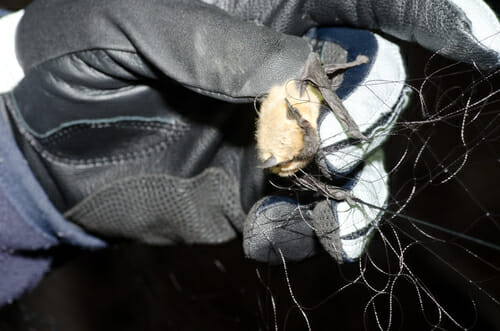
How Bats Get Into Your Home
Bats do not chew or tear their way in the way squirrels or raccoons do. They exploit gaps that already exist: deteriorating roof trim, gaps around chimney flashings, spaces where siding meets soffit, and openings around utility penetrations. A gap as small as three-eighths of an inch is enough for a Little Brown Bat to squeeze through.
Common entry points in Delaware and Maryland homes include:
- Ridge vents and roof edge gaps
- Areas where chimneys meet the roofline
- Behind loose or warped fascia boards
- Gaps around attic louver vents
- Spaces under lifted roof shingles
Because they enter through pre-existing gaps rather than creating new damage, bat entry points are often invisible until you know what to look for.
Signs You Have Bats in Your Home
Bat colonies in attics often go undetected for months or years. The most common signs include:
- Guano accumulation near the base of exterior walls, on attic insulation, or around entry points. Bat droppings are small and dark, similar to mouse droppings but with a crumbly texture.
- Staining and odor around entry points from the oils in bat fur, which leave dark smear marks on wood and siding over time.
- Sounds at dusk and dawn, when bats are leaving to feed and returning. You may hear light scratching, squeaking, or a rustling sound in the walls or attic.
- Bats flying indoors, which typically happens when a young bat that cannot yet fly wanders out of the roost area and into the living space.
The Rabies Risk
Bats are the most common source of rabies transmission to humans in the United States. The reason bat bites are so dangerous is that they are often not noticed. The Little Brown Bat, the most common species found in Delaware and Maryland homes, has teeth so small that a bite can break the skin without leaving a mark you would recognize.
If you wake up and find a bat in the room where you were sleeping, or if a bat has been in a room with a child or a pet, the CDC recommends treating the situation as a potential exposure. The bat should be captured without being killed so it can be tested. Do not handle the bat with bare hands. Call us and we can assist with safe capture.
If exposure has occurred, rabies post-exposure prophylaxis is highly effective when started promptly. Time matters. Do not wait.
Bat Guano and Histoplasmosis
Beyond rabies, bat guano creates a secondary health risk. Guano that accumulates in attics or wall voids can harbor the fungal spores that cause histoplasmosis, a respiratory illness caused by inhaling disturbed spores. In most healthy adults, histoplasmosis causes flu-like symptoms. In people with compromised immune systems, it can become serious.
Guano cleanup is not a DIY job. Disturbing accumulated guano without proper respiratory protection and containment can release spores into the air throughout the home. Professional remediation involves protective equipment, HEPA filtration, and proper disposal.
Beyond the health risk, large accumulations of guano are heavy, acidic, and can compromise attic insulation and structural wood over time.
Why Bat Removal Has to Be Done Correctly
Bats in Delaware and Maryland are protected under state and federal law. You cannot simply seal them in or use poison to eliminate a colony. The legal approach is exclusion: installing one-way devices at active entry points that allow bats to exit but not re-enter, then sealing all other gaps once the colony has vacated.
Exclusion also cannot be performed during maternity season, which runs from approximately June through mid-August. During this period, young bats that cannot fly are present in the roost. Sealing the colony in during maternity season traps the young inside, where they die and create additional odor and health problems. Any company performing bat exclusion during maternity season is either uninformed or not following proper protocol.
Outside of maternity season, a properly performed exclusion will clear the colony within a few days to two weeks, after which all entry points are permanently sealed.
Contact Bay Area Wildlife Solutions
If you are hearing sounds in your attic, finding guano, or have seen a bat inside your home, do not wait. Bay Area Wildlife Solutions provides licensed bat exclusion and guano remediation services throughout Delaware and the Eastern Shore of Maryland, including Rehoboth Beach, Dover, Ocean City, Salisbury, and surrounding areas.
Call us at (302) 500-0181 or contact us online. We offer 24/7 emergency service for bat encounters inside the home.